Sacraments
The Sacraments
The Mystery of Baptism
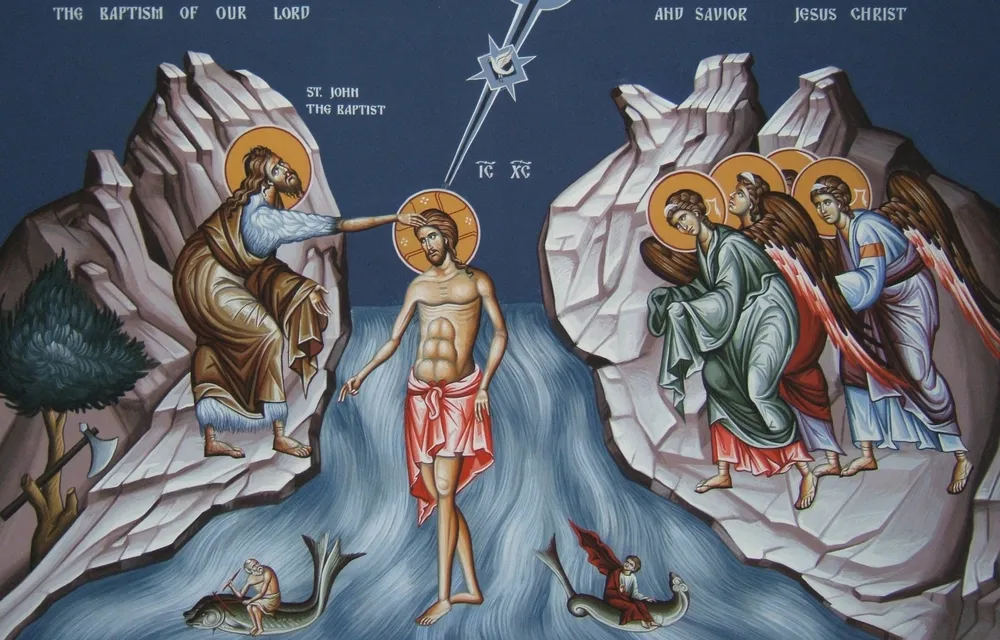
Baptism is the first Holy Mystery (sacrament) through which one becomes part of Christ's Church.
Baptism is a condition for salvation according to the Lord's own words: "no one can enter the Kingdom of God unless he is born of water and the Spirit" (John 3:5). Baptism is also called the "washing of regeneration", i.e. the place of cleansing washing and spiritual rebirth. The prayers said before the Mystery itself testify that before baptism a person puts off "the old man" and is born as a new man in Christ.
That man is spiritually reborn in the baptismal font is a necessity for entering into intimate communion with "the Heavenly Bridegroom" – our Lord, God and Saviour Jesus Christ.
In English, the word "baptise" comes from the Greek "baptizein", which literally means to immerse in water. In baptism, man mystically participates in the Lord's death (through full immersion in water, which symbolises burial) and Resurrection (when one steps out of the water again). Man passes from a state of being "in Adam" to being "in Christ". He receives a share in the Divine nature (2 Pet. 1:4), entering upon the path of return to the heavenly existence from which our forefathers Adam and Eve fell. In baptism, man is called to leave his old life, "escape the corruption in the world caused by evil desires" (2 Pet. 1:4) and begin a new – Christian – life.
Therefore John the Baptist called baptism the "baptism of repentance", and repentance is a condition for partaking in baptism's Holy Mystery. "Repentance" (from Greek μετάνοια) means to change oneself, to change one's mind, one's worldview and thereby be enlightened. Adults who wish to be baptised must therefore confess their sins before baptism as a mandatory part of baptismal preparation.
Without repentance from sins, baptism becomes meaningless. According to the words of the Apostle Peter: "It would have been better for them not to have known the way of righteousness than to have known it and then to turn their backs on the sacred command that was passed on to them" (2 Pet. 2:21).
The Christian life, i.e. life according to God's commandments, is an indication of one's faithfulness to the Heavenly Bridegroom, to whom we join ourselves by His grace and of our own free will, proclaiming it publicly with the words: "I unite myself to Christ!" just before baptism. This firm resolve is the foundation for man to approach the Mystery.
Thus the blessed Apostle Paul describes the mystery of baptism with the following words, read aloud during the baptism service: "Or don't you know that all of us who were baptised into Christ Jesus were baptised into his death? We were therefore buried with him through baptism into death in order that, just as Christ was raised from the dead through the glory of the Father, we too may live a new life. For if we have been united with him in a death like his, we will certainly also be united with him in a resurrection like his. We know that our old self was crucified with him so that the body ruled by sin might be done away with, that we should no longer be slaves to sin. For anyone who has died has been set free from sin. Now if we died with Christ, we believe that we will also live with him. For we know that since Christ was raised from the dead, he cannot die again; death no longer has mastery over him. The death he died, he died to sin once for all; but the life he lives, he lives to God. In the same way, count yourselves dead to sin but alive to God in Christ Jesus our Lord." (Rom. 6:3-11).
Since repentance is a condition for acquiring communion with God, it is also a condition for preserving one's faithfulness and communion with Him. After baptism, the baptised gain access to partake of the Holy Mysteries – the Body and Blood of the Saviour – and the mystery of repentance (Confession), in which one is called to participate on a regular basis. Steadfast and frequent participation in the Church's liturgical life is one of the fruits of repentance – repentance from the old life to the new life in Christ. Without this, one quickly loses one's spiritual strength, and in the worst case loses one's faith entirely. Those who wish to be baptised must therefore be ready to live a new life: they must know the fundamental truths of faith and the spiritual life. Adults may only be permitted to be baptised after thorough preparation called "catechisation".
To be catechised, one must be firmly resolved to learn more about the Orthodox Christian Faith with a view to becoming part of it. After a conversation with the priest, one may be admitted to the "catechumenate" (from the Greek word κατηχούμενος – catechumen: disciple or learner). Thus one becomes Christ's pupil, preparing for baptism as a catechumen.
The time as a catechumen can be compared to the engagement period when one awaits the solemnity of the wedding – union with Christ. This time should be cherished and held in esteem.
In our parish, two catechism groups are established annually, one beginning its catechism course in spring and the other in autumn. The period as a catechumen lasts at least one year. Catechetical instruction is held once a week – each group separately.
For those wishing to be baptised, we ask you to contact the priest to be enrolled in one of the two catechism groups.
Infant baptism is performed without prior catechism, but on the basis of at least one mandatory meeting with the child's parents and godparents (sponsors).
Only Orthodox Christians may serve as godparents in the Church, and they must at minimum know the Creed and be ready to assume responsibility for the child's spiritual and church upbringing.
Parents should remember that the prerequisite for baptism to bring the greatest benefit is if the child is regularly brought to Church to partake of the Holy Eucharist. Children learn from their parents' example, which is why parents should all the more attend to their own spiritual life and regularly confess their sins and receive Communion.
For more thorough preparation, we recommend reading "St. Cyril of Jerusalem's Catecheses" and "The Law of God" by the priest-martyr Daniel Sysoev. For children we recommend "The Law of God" by Protopresbyter Seraphim Slobodskoy. The books can be obtained on Amazon.
The Mystery of Marriage – The Crowning
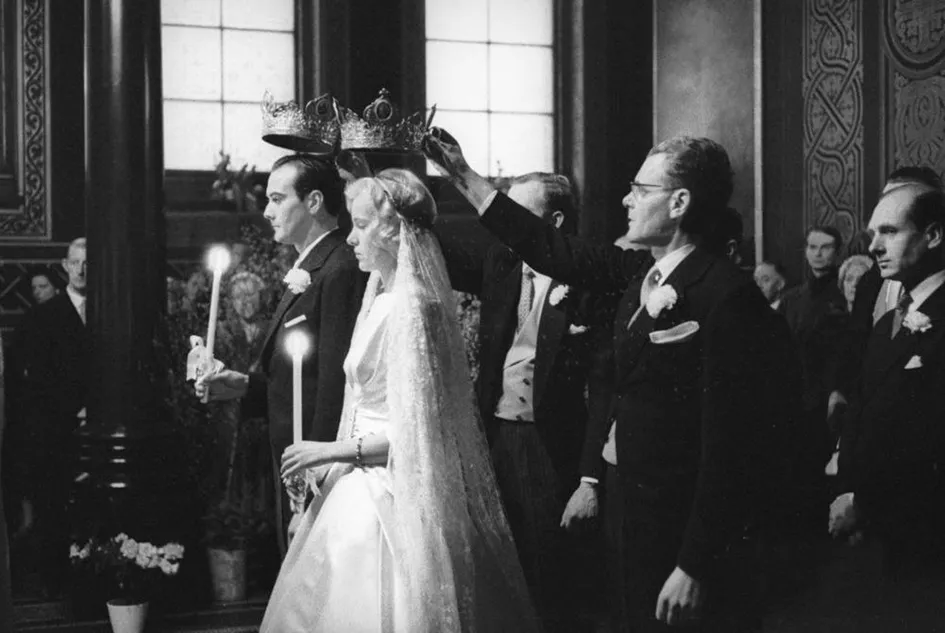
Couples who decide to enter into Holy Matrimony to unite their lives in a common striving after God receive God's gracious help in the church Mystery, which makes their marital union eternal and thus extends into the heavenly life.
Marriage is God's ordinance: "Therefore a man shall leave his father and his mother and hold fast to his wife, and they shall become one flesh" (Gen. 2:24). In the New Testament, Jesus Christ adds, repeating these words: "So they are no longer two but one flesh. What therefore God has joined together, let not man separate" (Matt. 19:5-6). Orthodox Christians do not say "till death do us part", for the divine Mystery does not cease with the advent of death. We believe not in death, which has been brought to nothing by Christ our God through His glorious Resurrection, but in the eternal life in His Kingdom.
There are several reasons why a marriage cannot take place:
The absence of a lawful civil marriage or a desire not to register one's marriage, which testifies to a frivolous attitude towards one's spouse. Blood relatives cannot enter into marriage, nor can persons with a great age difference, those already in an existing church marriage, if one in the couple is not baptised, or if it is a fourth or further marriage. All these matters are clarified by the priest during the initial conversation.
Weddings are not performed:
• On Tuesdays, Thursdays and Saturdays throughout the year.
• On the day before one of the twelve great feasts and great holy days.
• During the fasts: the Great Fast, the Apostles' Fast, the Dormition Fast and the Advent/Nativity Fast.
• During the celebration of Christ's Nativity from 7 January to 18 January.
• On Meatfare Sunday, during Shrovetide week and on Cheesefare Sunday.
• During Bright Week (the week after Pascha).
• On the days before and on the day of the Beheading of St John the Baptist, 11 September, and the Exaltation of the Cross, 27 September.
Marriage can be celebrated in our church by prior arrangement with the priest.
The church rector has marriage solemnisation authority, i.e. authority to officiate at civilly valid marriages, which is why marriages solemnised in our church are recognised and registered by the state as lawful marriages.
The meaning and purpose of church marriage in the Orthodox Church is a joint, active striving towards communion with the true God for the salvation of the spouses' souls. Therefore marriage with a person who does not believe in the true God and does not believe in the salvation of the soul is meaningless.
Before entering into marriage, it is recommended to read the book "Enduring Love: Laying Christian Foundations for Marriage" and "Marriage and Virginity According to St. John Chrysostom" by Archpriest Josiah Trenham, "Marriage: An Orthodox Perspective" by Protopresbyter John Meyendorff, and the book "Marriage to a Nonbeliever?" by the priest-martyr Daniel Sysoev.
As a conclusion to this brief explanation of the mystery of marriage, we present to those considering a church marriage the "Address to the Bridegroom and Bride" of St John of Kronstadt:
"Honourable bridegroom and honourable bride! You are about to enter the great mystery called marriage. It is great because the marriage of man and wife symbolises the most holy union of Jesus Christ with the Church, that is, with those who believe in Him: as the husband is the head of the wife, so Christ is the head of the Church (Eph. 5:23); as bridegroom and bride are crowned in marriage into one flesh, so Christ and His Church are one body, for those who truly believe in Him are members of His Body, of His flesh and of His bones (Eph. 5:30).
Such great significance of the mystery of marriage imposes upon you both very important duties, which you must strive to fulfil in every way. Your life together must be pure and holy, as the Lord's covenant with the Church is holy; it must be wise, loving, peaceful and inseparable. Your life together must be pure and holy, for the Lord Himself, who in the beginning created man, male and female, unites husband and wife into one flesh for mutual aid in bodily and spiritual needs and for the multiplication of the human race.
The goal is exalted and holy: From now on you become living instruments of the divine goodness and omnipotence, for through husband and wife the All-good Creator calls rational creatures into existence and life, His future children and heirs of the Kingdom of God. And if the Lord blesses you with such, you must bring them up in the rules of the Orthodox faith and the Christian life, and above all serve as an example of faith, piety and godliness for them. Also towards each other you must be examples of meekness and kindness, abstinence, goodness, honesty and diligence, obedience to God's will, patience and trust; help each other; care for each other, bear with each other, covering each other's weaknesses with love.
There are also unhappy marriages: Sometimes a husband and wife seem to come together only for sin and misfortune for them both. Why are they unhappy? Mostly because of their different personalities, because of mutual incompatibility; because of the husband's stubbornness, self-will and demanding behaviour, or because of his shameless disposition; because of infidelity in the husband or wife; the husband's intemperance or passion for gambling; because of the wife's passion for magnificent clothes, her self-will, anger, contentiousness, stubbornness, inability to tolerate want in life's necessities. May the Lord help you avoid such sinful life together and such marital misfortunes.
Always have faith and godliness in your hearts: wisdom, patience, hope; work and pray; go to bed and rise with prayer in your heart and on your lips; do not neglect the church services; zealously fulfil the Christian duty of confession and participation in Christ's Holy Mysteries. Besides the grace of purification from sins and sanctification of your souls and bodies, in these Mysteries you will find the grace of steadfast concord, the sanctification of the future generation in the loins and womb, renewal of spiritual and bodily strength, help, comfort and encouragement in difficult life circumstances and healing of diseases. Your life together must be wise, for the holy Apostle Peter says: "Husbands, live with your wives in an understanding way, showing honour to the woman as the weaker vessel, since they are heirs with you of the grace of life, so that your prayers may not be hindered" (1 Pet. 3:7).
And you must always understand why the Lord has united you with the bonds of marriage and crowned you into one flesh: it is so that you, unceasingly, with your united strength, may strive to attain the Kingdom of God. And if God grants you children, they must likewise be brought up and especially prepared to inherit the eternal goods, for temporal goods are deceptive, short-lived and do not constitute the purpose of our life. Christians have been promised incorruptible, spiritual and eternal goods. Stir one another to love of God and the goods on high and to love your neighbour. With the heavenly homeland in mind at all times, consider yourselves strangers and pilgrims on earth; value your time and use it for righteous deeds, not for empty, vain and sinful deeds; consider each day as a great gift of God's mercy, given us for our conversion to God, for restoration, for confirmation and perfection in the virtues, for the salvation of our souls. "Making the best use of the time, because the days are evil" (Eph. 5:16).
Furthermore, your life together must be loving and peaceful. And how could it be otherwise? For no one ever hated his own flesh, but nourishes and cherishes it, just as Christ does the Church. But you are from now on one flesh. A man must love his wife as his own body, for he who loves his wife loves himself (Eph. 5:29, 28). If you live in mutual love, you will draw God's grace down upon yourselves and your offspring – and God will dwell in you and crown all your undertakings and deeds with blessed success. For where love is, there is God, and where God is, there is all that is good. With love, peace and calm must reign in your home, for love is patient and bears all things and does not allow a man to become irritated, angry, self-willed or to offend in word or deed.
Finally, your life together must be indissoluble – until death and the grave. Christian love loves to the end, not merely for a time; it is firm and constant. There will be temptations against your love, whether due to the weaknesses of one or the other, or differences in character or habits, or from other people, or from the eternal enemy – overcome these temptations with manliness. Be wise as serpents and innocent as doves (Matt. 10:16). Do not become agitated, be patient, be forbearing and strengthen yourselves by faith in Christ Jesus, who always, honourable bridegroom and honourable bride, must be for you a constant example of holy love, meekness, gentleness and patience – your strength, your light and Guide, your Protector and Saviour until the grave. Amen."
– St John of Kronstadt
The Mystery of Repentance (Confession)
"If we confess our sins, He is faithful and just to forgive us our sins and to cleanse us from all unrighteousness" (1 John 1:9).
The Mystery of Repentance (Confession) is one of the seven sacraments of the Orthodox Church, in which those who sincerely confess their sins receive forgiveness from God Himself through the priest's prayer and blessing. Confession can only be completed by a priest or bishop.
If the Lord only cleansed sins in baptism, few would be saved. But in His mercy He gave us another cleansing, also called "the second baptism", a baptism in tears. Even before the Crucifixion Christ promised the apostles the power to "bind and loose" sins (Matt. 18:18), and after the Resurrection, on Easter evening, He did just that – He breathed on the apostles and said: "Receive the Holy Spirit. If you forgive the sins of any, they are forgiven them; if you withhold forgiveness from any, it is withheld" (John 20:22-23). On the basis of this gift the Church has the Mystery of Repentance, where the successor of the apostles – a bishop or priest – forgives the penitent's sins by virtue of their confession.
As St. Simeon writes: "By repentance our correction from the sins we have newly committed takes place. And since after baptism there is no other way to be called to salvation except through struggle and labour, through repentance and tears, through confession of sins and turning away from evil, this great gift has been given to us." After a series of prayers the penitent, at the priest's request, may recite the Creed and then confess their sins, naming each one. When all transgressions have been named and the person has promised not to repeat them, the priest may pray the prayer of absolution. If the sin has been serious, the priest imposes upon the sinner as a healing measure a spiritual medicine – a penance (epitimia), which heals the consequences of the spiritual illness caused by sin.
In the order of the mystery of repentance, the priest gives the penitent an exhortation after they have confessed their sins: "From all these sins you must from now on guard yourself, for you have been baptised with the second Baptism according to the Christian mystery's ordinance. Now make a good beginning with God's help and do not be so foolish as to return to your old sins and thereby become a mockery, for this does not befit a Christian; but may God help you by His grace to live honourably, justly and devoutly."
After confessing one receives not only forgiveness, but also the gracious strength never to repeat the sin again. It is of course necessary to apply all one's will in the struggle against sin, and to unite one's will with God's will, so that one can make good use of God's grace in the struggle.
Why is it necessary to confess in a priest's presence and not simply pray to God for forgiveness?
Sometimes people ask: "Why is it necessary to confess in a priest's presence in connection with a church Mystery? Does God not see my heart? If I have done wrong, sinned, but I see it, am ashamed of it, and pray to God for forgiveness – is that not enough?"
God instituted the church mystery of repentance as a place for purification and healing of the soul from sins committed after baptism. If we understand that sin is filth and a spiritual illness, we must also understand that filth is washed away by an external source of clean water, and illnesses are healed in a hospital in the presence of a doctor. Shame is not a purifying or healing remedy in itself, but shame can nevertheless serve as a constructive driving force to seek the pure source or a doctor. God's grace is the pure cleansing water for the soul; the source from which this water flows is Christ's Church, and the purification is the Mystery of Confession.
A similar analogy can be drawn if we see sin as an illness. Then the church is a hospital, and confession is the treatment of the illness. Furthermore, confession itself in this example can be seen as a surgical operation to remove a tumour (sin), and the subsequent communion of the Holy Gifts – Christ's Body and Blood in the mystery of the Eucharist – as postoperative therapy for healing and restoration of body and soul.
What does a correct confession consist of?
Confession is an oral admission of one's sins before a priest. This must be approached as follows:
1) - with firm faith in our Lord Jesus Christ and with hope in His ineffable mercy towards us sinners.
2) - with true contrition over our sins, since they mock God's love for us and separate us from the source of life and immortality – God.
3) - it is necessary to forgive all our enemies, to be reconciled inwardly and, if possible, outwardly with all who have done us harm and who have injured us. This is the condition for forgiveness of our evil deeds. In the "Our Father" we pray: "And forgive us our debts, as we also have forgiven our debtors." This is a very difficult criterion, but in it God's justice is fulfilled. God does not repay us evil for evil, but forgives us, and therefore we must forgive our neighbour.
4) - with a sincere and heartfelt confession of one's sins. Any concealment or untruth will not ease the conscience, and the mystery of repentance will not be accomplished. We confess before God, and the priest is only a witness to our confession, called to help us remove the burden of sin and give the necessary spiritual healing.
5) - it is necessary to resolve wholeheartedly not to sin again. From this moment a new life begins, and the struggle against sin intensifies. Without such resolve, confession would be mere empty talk.
Questions to help those preparing to participate in confession:
1. Is your faith in God shaken by lack of faith or doubt? Are you godfearing, do you mock God?
2. Do you care for your salvation? Do you pray to God daily with sincerity? Do you go to church on Sundays and holy days or do you mock God by working for your own gain on such days?
3. Do you keep the fasts, and do you wear the cross on your chest? Are you ashamed to admit that you are a Christian and a believer? Do you treat holy things with reverence?
4. Do you help your neighbour, and do you visit the sick and prisoners? Do you give alms to those in need, and do you show compassion for the poor?
5. Do you live off others' labour by being lazy? Do you steal from your neighbour or from society?
6. Do you honour your elders and parents, or do you offend them? Do you care for them in their illness and old age? Do you pray for your loved ones, both living and departed? Do you bring up your children in faith and piety?
7. Have you killed anyone, physically or indirectly, or have you caused anyone's death? Have you killed a child in the womb (through abortion or other means, such as "morning-after pills" or other contraceptives that prevent the embryo from implanting in the womb?) or have you given others such advice?
8. Are you unfaithful to your husband or wife? Is your marriage blessed by God (are you church-married)? Do you indulge in bodily perversions? Do you enjoy reading erotic books, watching similar films or magazines? Do you tempt others with indecent, seductive behaviour and clothing?
9. Do you drink too much, smoke, use drugs or have other bad and harmful habits (such as gambling etc.)?
10. Do you swear, slander, judge, lie, defame, curse or engage in idle talk?
11. Do you seek help from sorcerers, fortune-tellers, witches, clairvoyants, healers, astrologers, hypnotists etc.? Do you practice these things yourself (magic, spiritism, hypnosis, yoga)? Do you turn to other religions while in the embrace of the Christian Church?
12. Are you passionately attached to luxury, things, food, money etc.? Do you envy anyone?
13. Are you proud and consider yourself superior, better or more worthy than others? Are you vain and do you perform good deeds demonstratively?
14. Do you love your enemies, do you pray for them, do you repay evil with evil, do you grieve anyone, do you mock the weak?
15. Do you bear your cross and sorrows patiently?
We have sinned, O Lord, before Thee in deed, word, thought, with all our senses: sight, hearing, smell, taste, touch and with other sins, those we know of and those we do not know of.
Confession over the telephone is categorically impossible, just as it is impossible to be baptised or partake of the Holy Eucharist over the telephone. The Mystery takes place only in the presence of a priest and the penitent themselves.
In our parish confession takes place during and after the evening services on Friday and Saturday evening. As an exception, a small number of people who live very far from the church and cannot come in the evening for this valid reason may confess before the beginning of the liturgy.
The Mystery of Communion (The Holy Eucharist)
One should prepare for Holy Communion in good time, over several days, in an appropriate manner, both spiritually and physically: by fasting, keeping one's body in purity, reading the Holy Scriptures, focusing on the divine rather than the earthly within, rejecting distractions that divert the mind from God, being reconciled with all people, not judging one's neighbour, having heartfelt contrition over one's sins, praying earnestly, attending all services when possible, expanding one's private prayer rule (especially for those who cannot come to church), remembering the Saviour's sufferings on the Cross for our salvation, His glorious Resurrection, His immeasurable love for us, and finally reverently reflecting on His incomprehensible greatness and gracious power.
One must not approach Christ's chalice without having confessed. After confession the priest gives a blessing for Communion.
One prepares for confession by reflecting on one's past life – one's sins committed since the last confession. One may even write some things down to share briefly at confession. But the most important thing is complete sincerity and a desire to change one's life so that Christ becomes your Friend, Guide, King and Lord. One may confess when the need arises. However, an attentive person will find it difficult to confess less than once a month. We have many habits that cannot be changed overnight. So some sins may return. The goal, however, is to avoid repeating them, to break bad habits and to acquire good ones.
Confessing one's sins at confession is obligatory before Communion, that is, before one can approach Christ's Chalice, which is the closest participation – the receiving of His whole life into oneself for the healing of one's own life. This is COMMUNION.
WHEN IT IS NOT CUSTOMARY TO PREPARE FOR COMMUNION WITH FASTING:
Fasting is a necessary spiritual practice that precedes the mysteries of confession and communion. But in the Orthodox Church it is traditionally not customary to prepare for Communion by strict fasting during "fast-free weeks" – weeks during the year when one does not fast due to the celebration of one of the great feasts.
These fast-free weeks are: - the week after the Sunday of the Publican and Pharisee, - Shrovetide - Bright Week - the first week after Pascha - the first week after Pentecost, followed by the Apostles' Fast - the Nativity season, from Christ's Nativity to the eve of Theophany. During this period the faithful prepare only in special circumstances (e.g. before a major surgical procedure) with their spiritual father's blessing for the Mystery of Communion by fasting. During the Paschal period there are various customs; here too it is best to consult a priest individually.
PREPARATION BEFORE COMMUNION:
One usually prepares for Holy Communion with a prayer rule, the details of which are described in the prayer book. Before the Divine Liturgy or the evening before, one should read "The Order of Preparation for Holy Communion" in the prayer book. One can, however, gradually grow into this prayer practice as needed, which is a separate topic that can briefly be discussed with the priest after confession.
Preparation for Communion consists of a three-day fast (on days when there is no established church fast) without meat or dairy products, or more strictly – without fish; or for those who want it even stricter – without oil, i.e. "cooking oil" (e.g. no fried potatoes). After confession the evening before one may still eat a light meal, but – at latest by midnight – one must not eat anything: no food, drink, smoking, no sweets or chewing gum...
ON THE MORNING OF THE DAY OF COMMUNION:
The very first thing we receive the next morning is Christ's Holy Gifts, Communion from the Chalice at the end of the Liturgy.
Question: Is it permitted to brush one's teeth before Communion?
Answer: It is not only permitted, but necessary. However, no one would swallow toothpaste or eat a toothbrush, even if hungry. The only thing to avoid is swallowing the water we rinse our mouths with. If one is inexperienced, one may accidentally swallow a little – the Church Fathers advise not to be scandalised in such a case, for it is not "drinking". Nevertheless, vigilance and care in this regard is always good.
Adults who arrive late for the service should not approach participation in Christ's Body and Blood. Infants receive Communion without confession until the age of seven and are gradually accustomed to long services. Before the liturgy the prayers called "the Hours" are read (these are two short services, 10 minutes each, read from 9:40 to 10:00). To stand at the Hours and participate in them by listening with one's whole heart is a good preparation for what follows. Those preparing to receive Communion should stand attentively and reverently throughout the entire liturgy, which begins on Sunday at 10:00 (on weekdays at 8:00 and on Saturday at 9:00).
THE DIVINE LITURGY...
The beginning of the Liturgy. The exclamation "Blessed is the Kingdom of the Father and of the Son and of the Holy Spirit..." opens Christ's very Kingdom to our hearts.
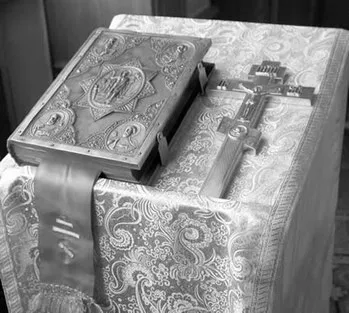
First part, "The Word": two psalms are sung, followed by the verses from "The Beatitudes..." from Christ's gospel preaching (chapter 5 of the Gospel of Matthew), during which the Gospel book, God's Word, is brought forth. A solemn ENTRANCE with the Gospel into the altar, into "The Holy of Holies", takes place. God's word is read aloud: the apostles' epistles and the Gospel itself. There may be several readings. After the gospel readings we ascend, as "up a ladder", through intercessory petitions (ektenias), to the second part of the Liturgy.
Second part, no longer a word but a reality – "The Word became flesh" – is the bringing of the Chalice and the blessing of the Gifts. The ENTRANCE takes place again, not a "little" one, but this time a "great" entrance. The great entrance takes place with the chalice containing wine and water, and the diskos on which the prepared bread rests. After the bread and wine are placed on the altar table in the centre of the sanctuary, the "ladder" of prayers follows again. Thus we leave behind the first 50–60 minutes of the liturgy. The congregation sings the "Creed" – about the Triune God and creation, about Christ the Saviour's work and about the Church. The last words: "I look for the resurrection of the dead, and the life of the world to come."
Christ's work, His life, is indivisible. It is the eternal life, revealed to us in time. But here time is transcended. This is precisely what happens during the Liturgy: entrance into our eternity with Christ. We are invited to this by the words: "Let us stand aright, let us stand with fear, let us be attentive, that we may offer the Holy Oblation in peace!". After the exclamation "Let us give thanks to the Lord" we offer thanksgiving for "all the benefits," He "has wrought upon us, those we know of and those we do not know of, the manifest and the hidden" – and for the greatest benefit, namely this service, which Christ has given us, He who gave Himself and His whole life, so that we too might live in the fullness of His love. He offered Himself and we offer ourselves to Him – and the prepared gifts (bread and wine) become His indivisible life through the invocation of the Holy Spirit and the blessing – new dimensions of the all-encompassing life are revealed, together with all the saints.
The third part, the ascent to Holy Communion: Of course the whole liturgy is an "ascent", but this is the final phase. It concludes with the communicant ascending the steps (usually three) to the "ambo", to the very doors of the altar, called the "Royal Doors", so that here at the entrance to Paradise, i.e. the altar, they may receive the whole of paradise, the whole of Christ, the whole Kingdom of God. This is the heavenly food that Christ has promised, and of which He once said that if we do not partake of it, we will not "have life in us" (John 6:53) – meaning of course that life which He has brought and in which He lives, while our temporal life will flow out into nothingness.
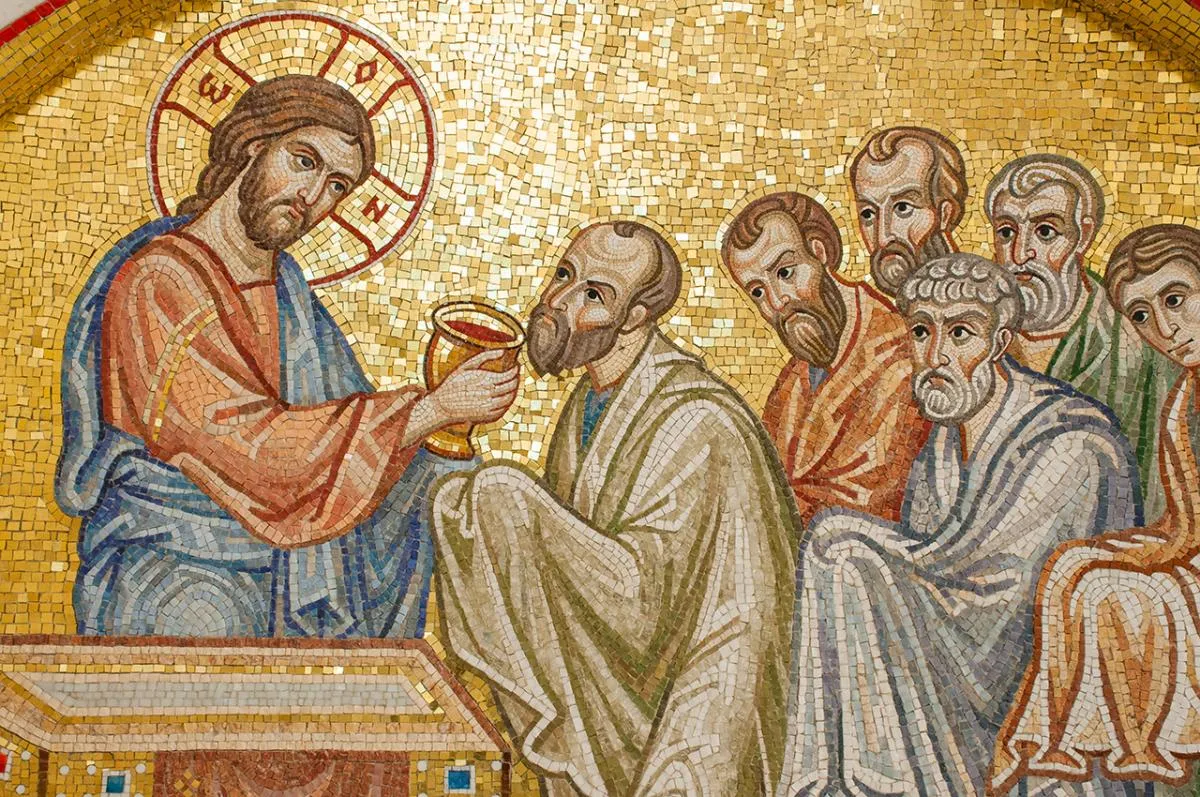
And so, after another "ladder of prayers", we ascend to the prayer which Christ Himself taught us – "Our Father...". Whole books have been written about this short, simple prayer. After "Our Father" is proclaimed: "The Holy things for the holy!", and after the priests have communicated inside the sanctuary with the doors closed, as the apostles once partook of Communion with Christ, the altar doors ("the Royal Doors") are opened, and Christ's Chalice is brought out so that the faithful may receive Holy Communion.
HOW TO APPROACH THE CHALICE:
The faithful have confessed their sins, received a blessing and approach with hands folded over the chest (they do not make the sign of the cross before the Chalice itself so as not to knock it over by accident). Do not hesitate to open your mouth wide; this will make it easier for the priest to give the Holy Gifts. Never bend your head downward, as it is impossible to deliver the gifts from below upward. It is better to tilt your head slightly back, and for tall persons one should bend slightly at the knees, so that the mouth is level with the Chalice; this will prevent the priest from worrying that something holy might fall to the floor. The received holy gifts must be swallowed immediately, and then the rim of the chalice must be kissed (as the myrrh-bearing women fell at the risen Lord's feet and met the Saviour early in the morning in the garden on the day of the Resurrection). Without crossing oneself the communicant steps away from the Chalice. One may, after descending from the ambo, turn towards the chalice, bow and make the sign of the cross in gratitude, but one never makes the sign of the cross before the Chalice itself. A warm drink awaits you below to rinse your mouth and lips, and then to swallow. Until the evening after Communion one should not brush one's teeth or spit, as one wishes to keep one's lips (also from superfluous words). In fact the Holy Communion embraces the whole person – we are now Christ's.
The conclusion of the Liturgy: After the moment when the Chalice is carried into the altar, solemn, triumphant church hymns follow, between which the priest blesses everyone in the church with the Chalice. As the priest first says quietly in the altar the words "Blessed is our God", he brings forth the Chalice, raises it and blesses everyone in the church with it, saying "always, now and ever and unto ages of ages". The Chalice is now carried away. There follows the "Prayer behind the ambo", so called because the priest descends from the ambo. After this prayer the priest usually delivers a sermon. And after the "dismissal blessing" the faithful come up and kiss the Cross (they kiss the Saviour's feet on the Cross and then the priest's hand).
On the sign of the cross: When making the sign of the cross, one should first accustom oneself to consciously and firmly bending the little finger and ring finger, so that their tips touch the palm and do not hang loose from each other. These two fingers symbolise our faith that Christ is one person but in two natures – both God and man. God's Son became the Son of Man. Thus He revealed the Triune God to us: the Father, the Son and the Holy Spirit. Only after His descent from heaven and manifestation on earth, and only from Him – the Son in two natures – did we learn of the Trinity, the three Divine persons in one Divine Essence. Only by folding the two fingers, and by extending the three remaining fingers and joining them – the middle, index and thumb – do we confess the Trinity as one and indivisible. Thus all five fingers – two and three – express our Orthodox faith in the one God and Christ the Saviour, through Whom humanity can receive adoption by the Father.