Our History
The Orthodox Christian Alexander Nevsky Church in Copenhagen is the only Orthodox church in Denmark built for the purpose, and is at the same time the oldest functioning Orthodox Christian congregation in the country. The church building is a monument to the Orthodox Church's presence in Denmark and is one of the capital's most notable architectural and cultural landmarks.
Alexander Nevsky Church was built in the years 1881–1883, the same year that Danish Princess Dagmar became Empress of Russia. The history of the church is therefore closely linked to Empress Dagmar (1847–1928), without whom the building would never have been erected.
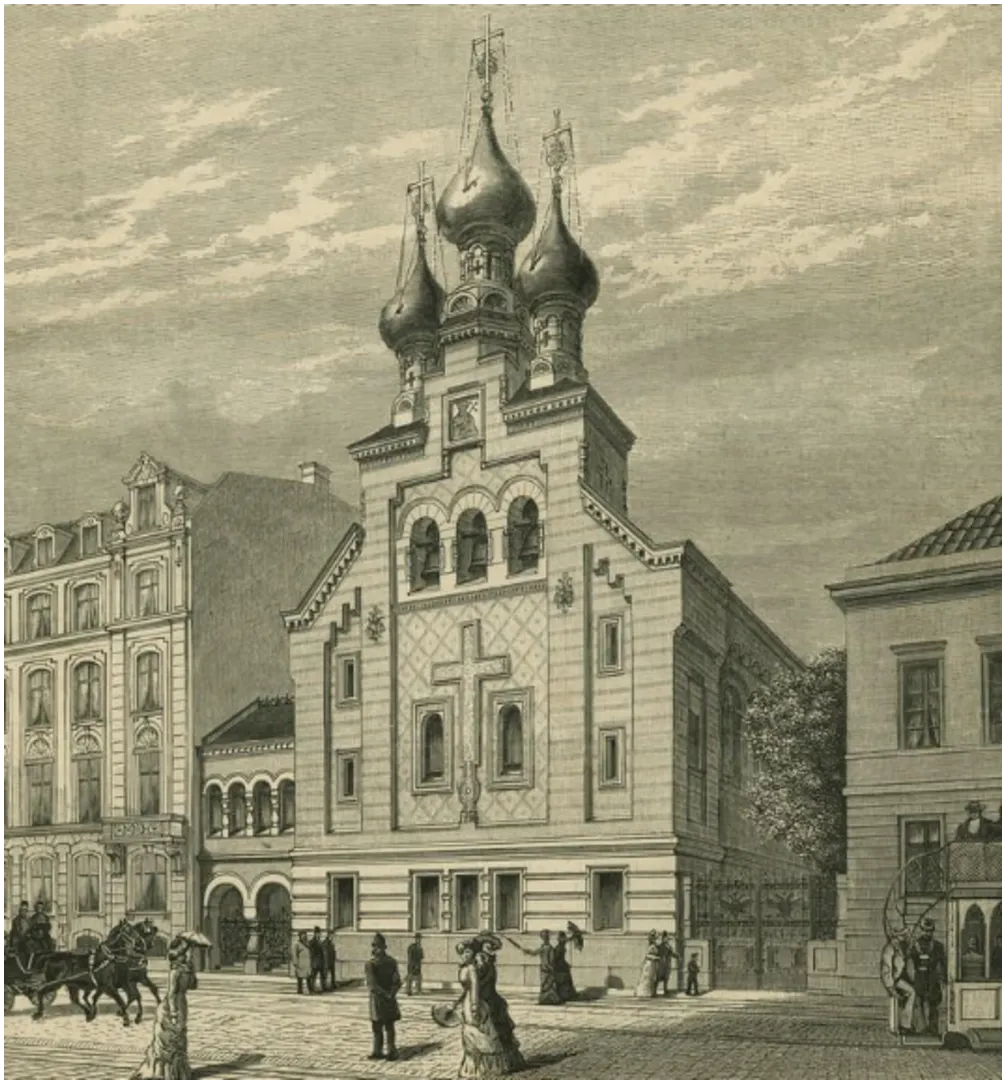
St. Alexander Nevsky Church
1741
The congregation takes shape
The congregation's history goes back further, however. The first Orthodox Christian congregation in Denmark that we know with certainty was Orthodox since the year 1054 AD was the congregation in honour of the Presentation of Christ in the Temple, consecrated and opened on 10 July 1741. The congregation was opened in connection with Count Peter Grigoryevich Chernyshev's appointment as ambassador of the Russian Empire to Denmark. The congregation's first rector was Archpriest Peter Blagoveshchensky.
One of the liturgical books that Father Peter brought with him from Russia was a festal Menaion printed in 1651, which to this day is kept in the collection of Alexander Nevsky Church.
A Dane named Adam Burchardt Sellius, born in Tønder in 1695, taught in the same period at the theological seminary in St. Petersburg, where he taught Latin. At the same time he worked for many years translating the old Russian chronicles and historical church documents into German. He is therefore called the first historian of the Russian Orthodox Church.
In 1744 Adam Sellius converted to Orthodox Christianity and in 1745 he received the monastic tonsure with the name Nicodemus. Later he was ordained as a hieromonk. As far as is known, Father Nicodemus is thus the first Dane to become a priest in the Orthodox Church since the 11th century. His enormously significant work for the preservation of the Church's history is today preserved in the monastery archive of the St. Alexander Nevsky Lavra in St. Petersburg and comprises many volumes.
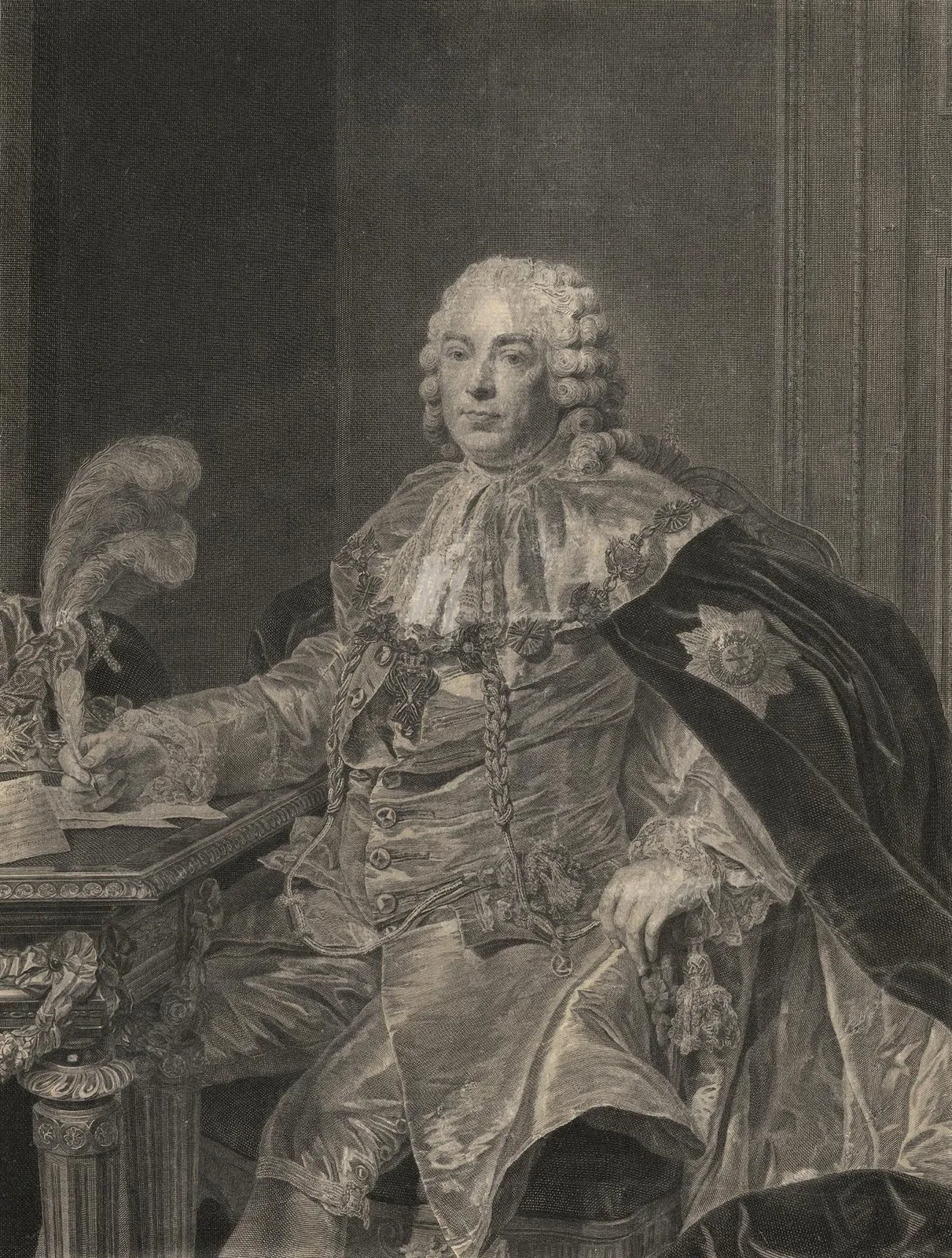
Ambassador of the Russian Empire to Denmark, Count Peter Grigoryevich Chernyshev
1797
The parish receives a new patron saint
On 5 August 1797, the Holy Synod decided to name the Orthodox congregation in Copenhagen in honour of the Holy Apostle Paul.
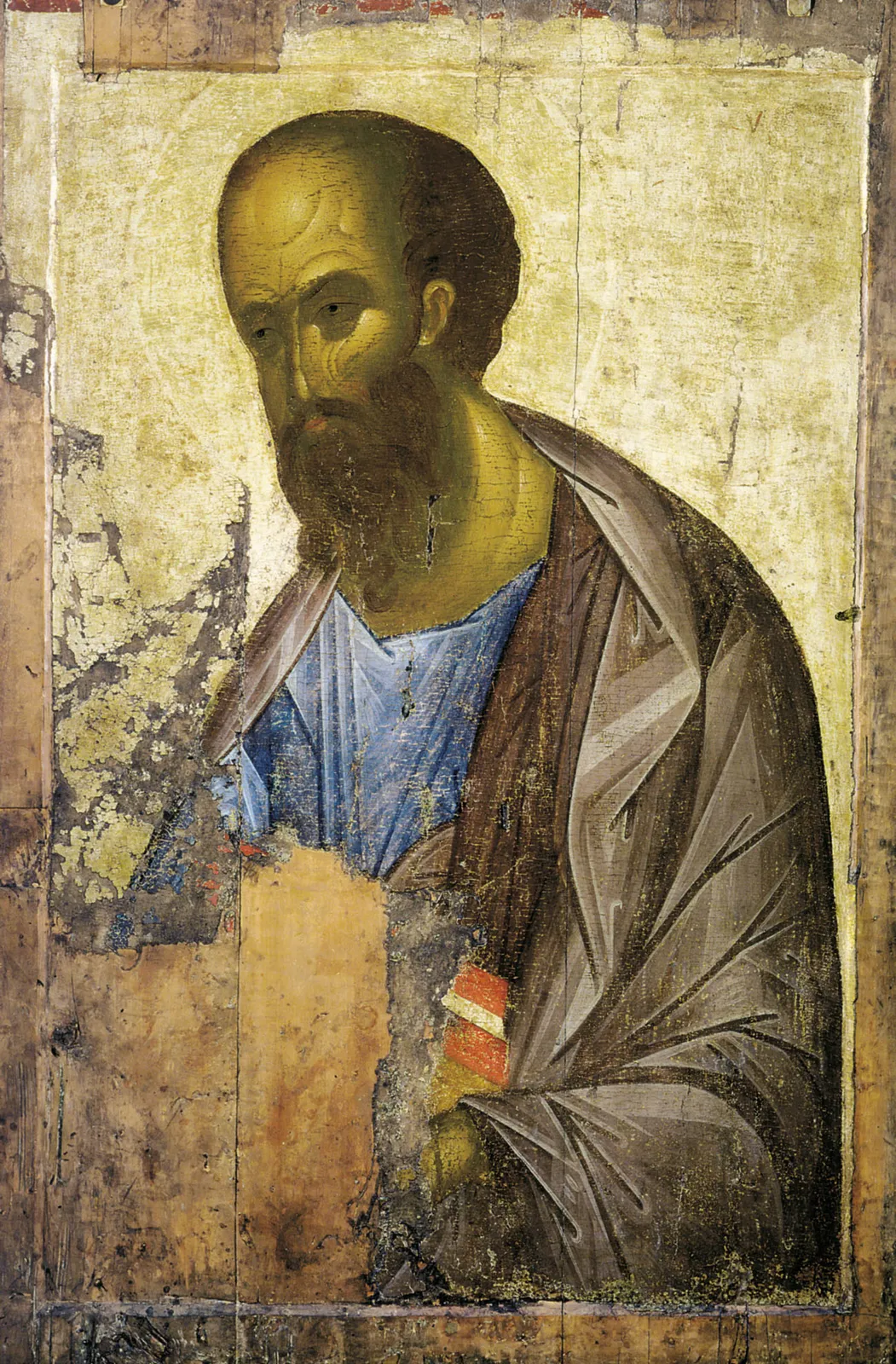
The Holy Apostle Paul
1797–1853
The search for parish premises
For many years, from 1797 to 1853, the congregation had no fixed place to meet and often held services in the ambassador's apartment or at the priest's own home.
But in 1852 the Russian Imperial Ambassador, Baron Ernst von Ungern-Sternberg (Ernst Wilhelm Rembert Freiherr von Ungern-Sternberg, 1794–1879), began to work diligently to obtain a building in Copenhagen for the Orthodox Church where regular services could be held.
In 1853 the congregation moved into premises at Reverensgade 2 (today called Laksegade), where it remained until 1873. The congregation then moved to new premises at Store Kongensgade 45, in the now demolished property that was in its time called "the Russian Palace".
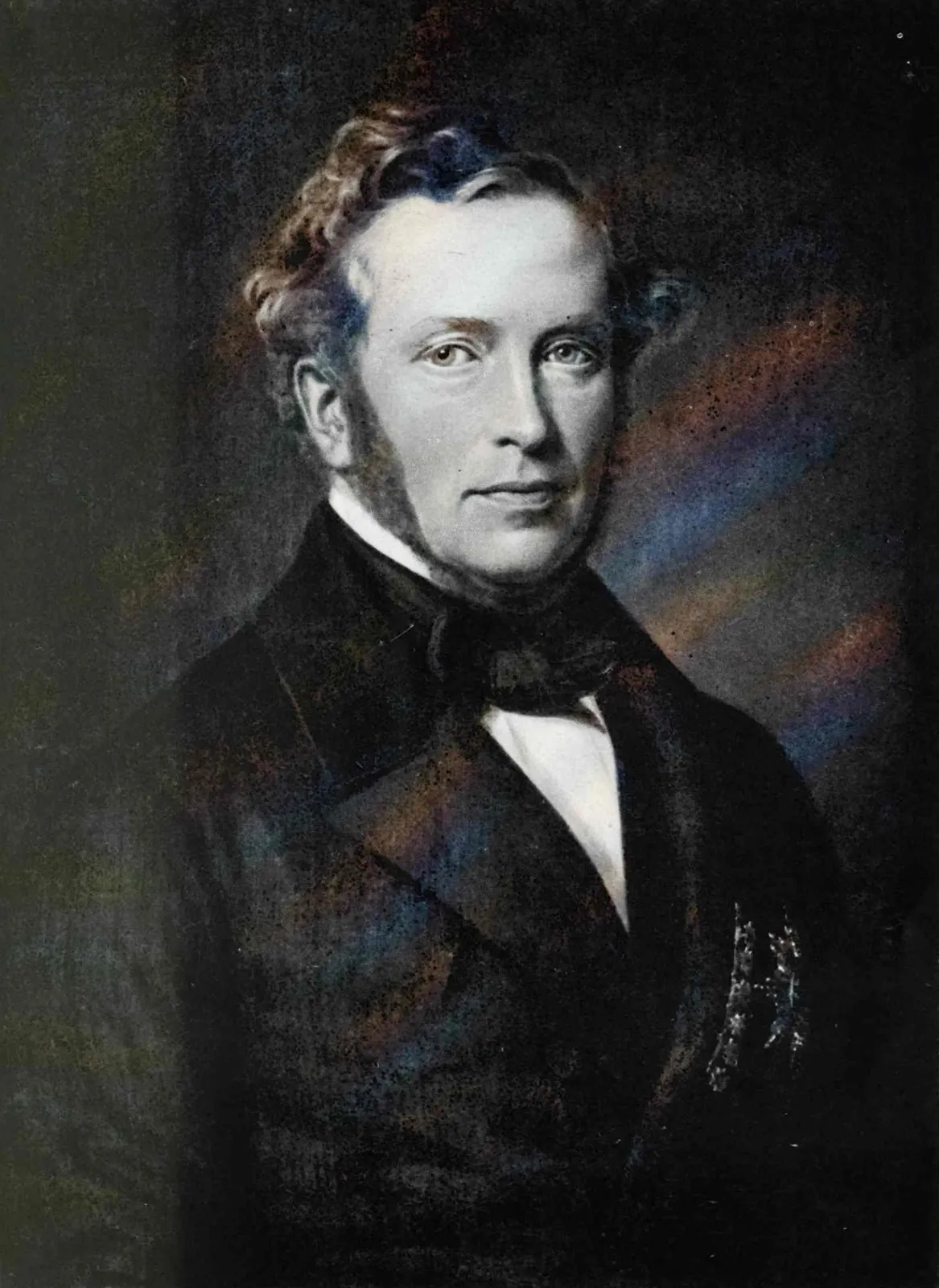
Russian Imperial Ambassador, Baron Ernst von Ungern-Sternberg
1866–1867
Princess Dagmar's conversion and marriage
In 1866 the Danish princess Dagmar (daughter of King Christian IX) was baptised into the Russian Orthodox Church with the name Maria, in honour of the Holy Apostle and Myrrh-bearer Mary Magdalene. According to old Russian tradition she took the patronymic "Feodorovna" (i.e. daughter of Theodore), in honour of the Theotokos icon known as "Feodorovskaya". That same year she was married to the heir to the throne of the Russian Empire, Grand Duke Alexander (the future Emperor Alexander III).
The future Empress Dagmar was instructed in Orthodox doctrine in the years before the wedding and embraced it wholeheartedly, as her later life bore witness.
The then Grand Duke Alexander and Grand Duchess Maria visited Copenhagen in 1867, and already on this visit the couple began to speak of building a proper Orthodox church.
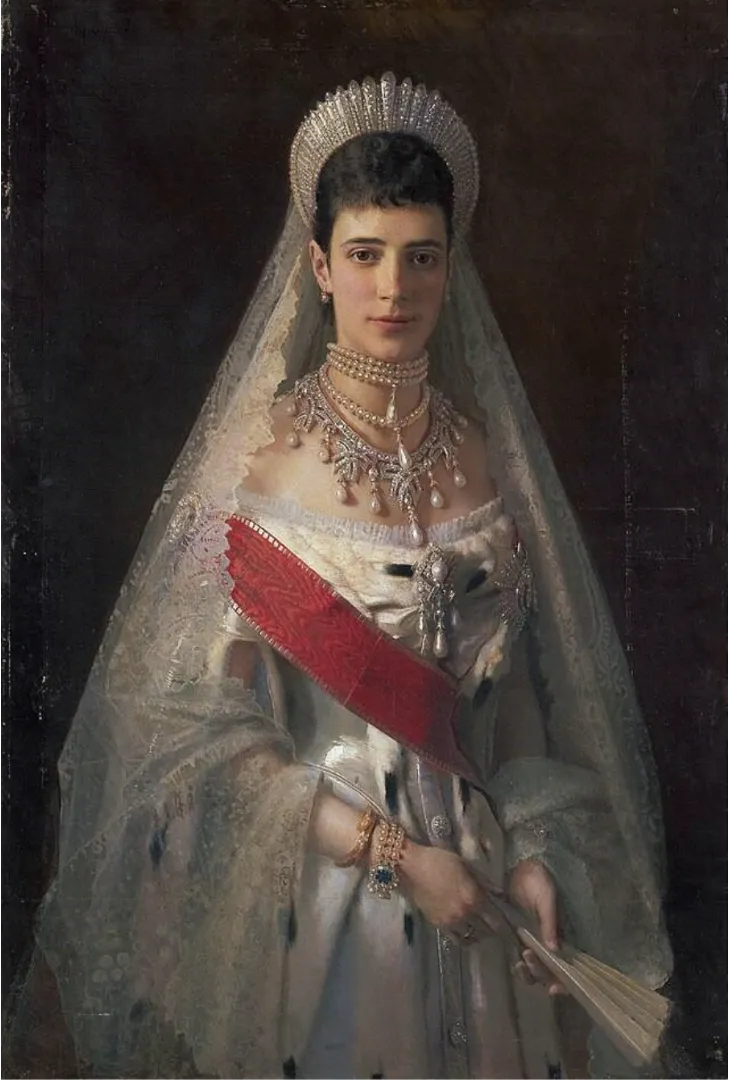
Daughter of King Christian IX, Princess Dagmar
1880
Purchase of the building plot for the church
This wish only grew with time, and on 2 April 1880 Grand Duke Alexander Alexandrovich ordered the purchase of a plot near Amalienborg for the construction of an Orthodox church.
The industrialist Carl Frederik Tietgen (1829–1901) sold the plot at Bredgade 53 to Grand Duke Alexander for 60,000 rigsdaler, equivalent to 300,000 gold roubles.
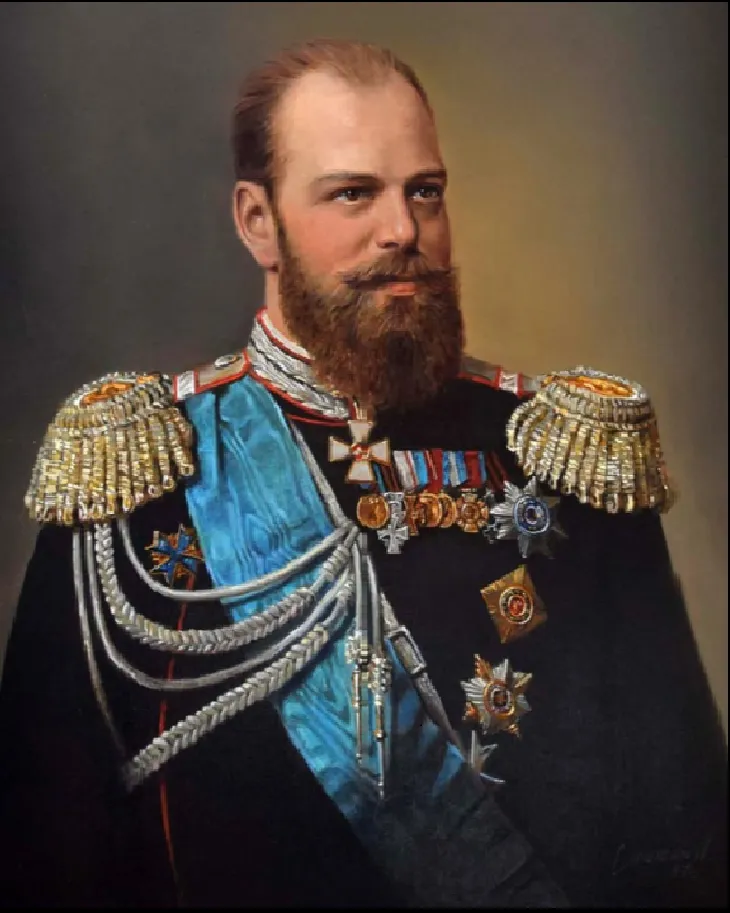
Grand Duke Alexander Alexandrovich
1881
Architect David Grimm is commissioned
In 1881 Emperor Alexander II was assassinated in an attack, whereupon Alexander III and Empress Dagmar became the new absolute rulers of Russia. That same year Emperor Alexander III commissioned architect and professor David Grimm to design the Alexander Nevsky Church in Copenhagen.
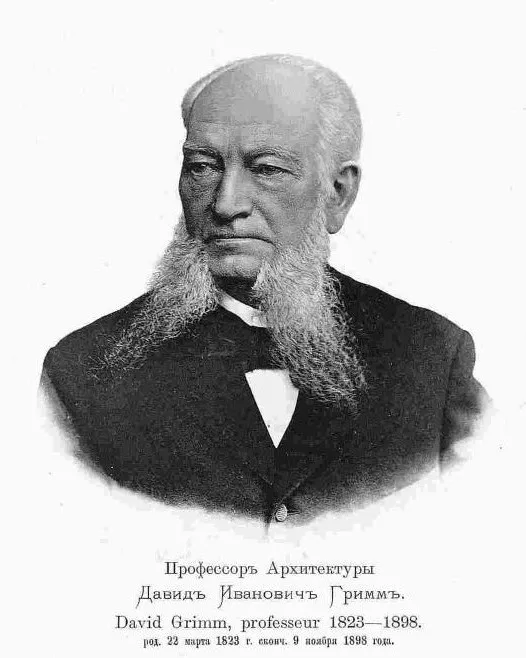
Architect and professor David Grimm
4 July 1881
The solemn foundation
As the project differed so greatly in architectural character from what had previously been built in inner Copenhagen, it required many months of careful review and revisions to the design.
However, when the public authorities received the news that the church would be visited by the Danish Royal Family, all problems were quickly resolved, and on 4 July 1881 the solemn ceremony took place at which the first foundation stone was laid for the construction of the church.
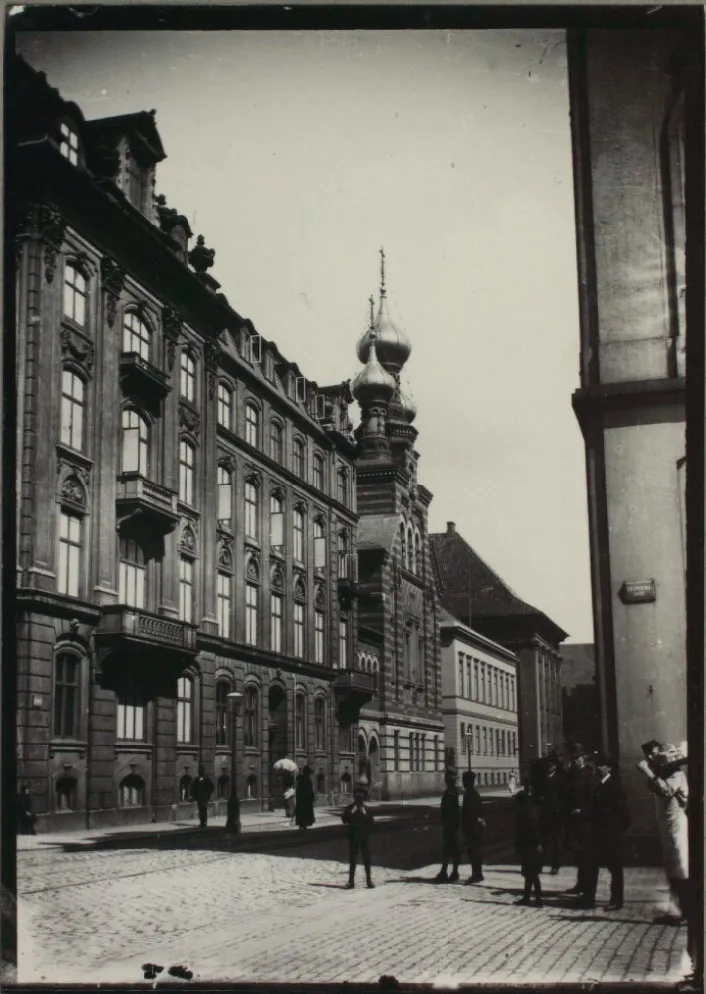
Bredgade with St. Alexander Nevsky Church
The course of the ceremony
In this connection a service was held on the site, where Archpriest Nikolaj Volobujev censed the ground with the thurible while the choir sang the troparion to the future patron saint of the church – the Holy Right-believing Grand Prince Alexander Nevsky.
After this Father Nikolaj offered a prayer to the Lord asking Him to protect and assist all the construction workers in the building of the church.
After the prayer, in accordance with Russian tradition, King Christian IX of Denmark solemnly laid a special container to be immured in the foundations of the future church. The container bore the following inscription in both Danish and Russian:
“In the first year of the reign of His Imperial Majesty Alexander III, Emperor of all Russia, and in the eighteenth year of His Royal Majesty Christian IX, King of Denmark, the Orthodox church in honour of the Holy Right-believing Prince Alexander Nevsky was founded in Copenhagen. O Lord, I have loved the beauty of Thy house, and the place where Thy glory dwelleth (Ps. 25:8). Blessed be the Lord for evermore. Amen”.
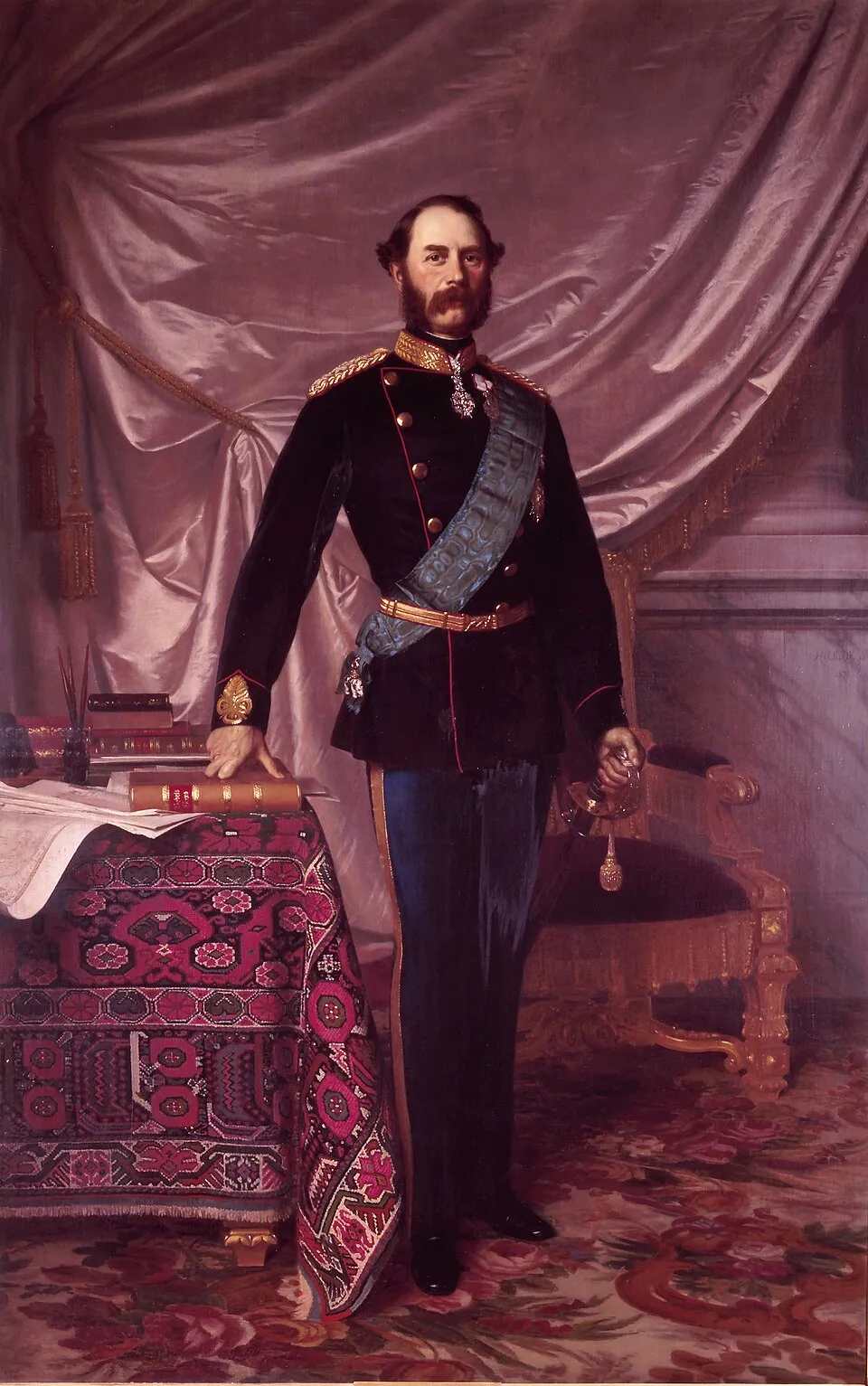
King Christian IX of Denmark
1881–1883
The architects behind the church
Architect David I. Grimm was assisted by architect and privy councillor Ferdinand Meldahl in collaboration with architect and professor Albert Christian Jensen in connection with the construction of the Alexander Nevsky Church.
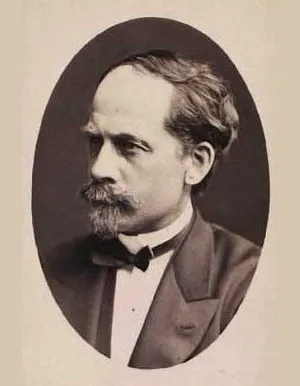
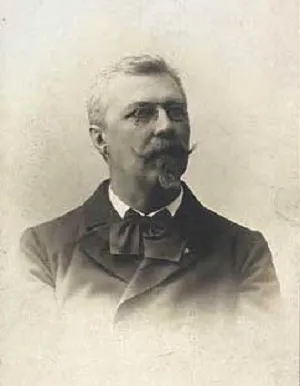
Architect and privy councillor Ferdinand Meldahl
1883
The architectural style
David Grimm designed the church in his favoured "Russian-Byzantine" style, devoting particular attention to the building's facade. The facade is faced with red and white brick, and the ground floor is executed in granite.
The church stands out in the streetscape with its distinctive architecture and golden domes crowned by majestic crosses. The church is a basilica and reflects in its entirety the architectural direction that in its day was known as "Alexander III style".
After the church was completed it was recognised as one of Copenhagen's landmarks, for which architect D. Grimm was made a Knight of the Order of the Dannebrog and was awarded the Grand Cross of the Order of the Dannebrog.
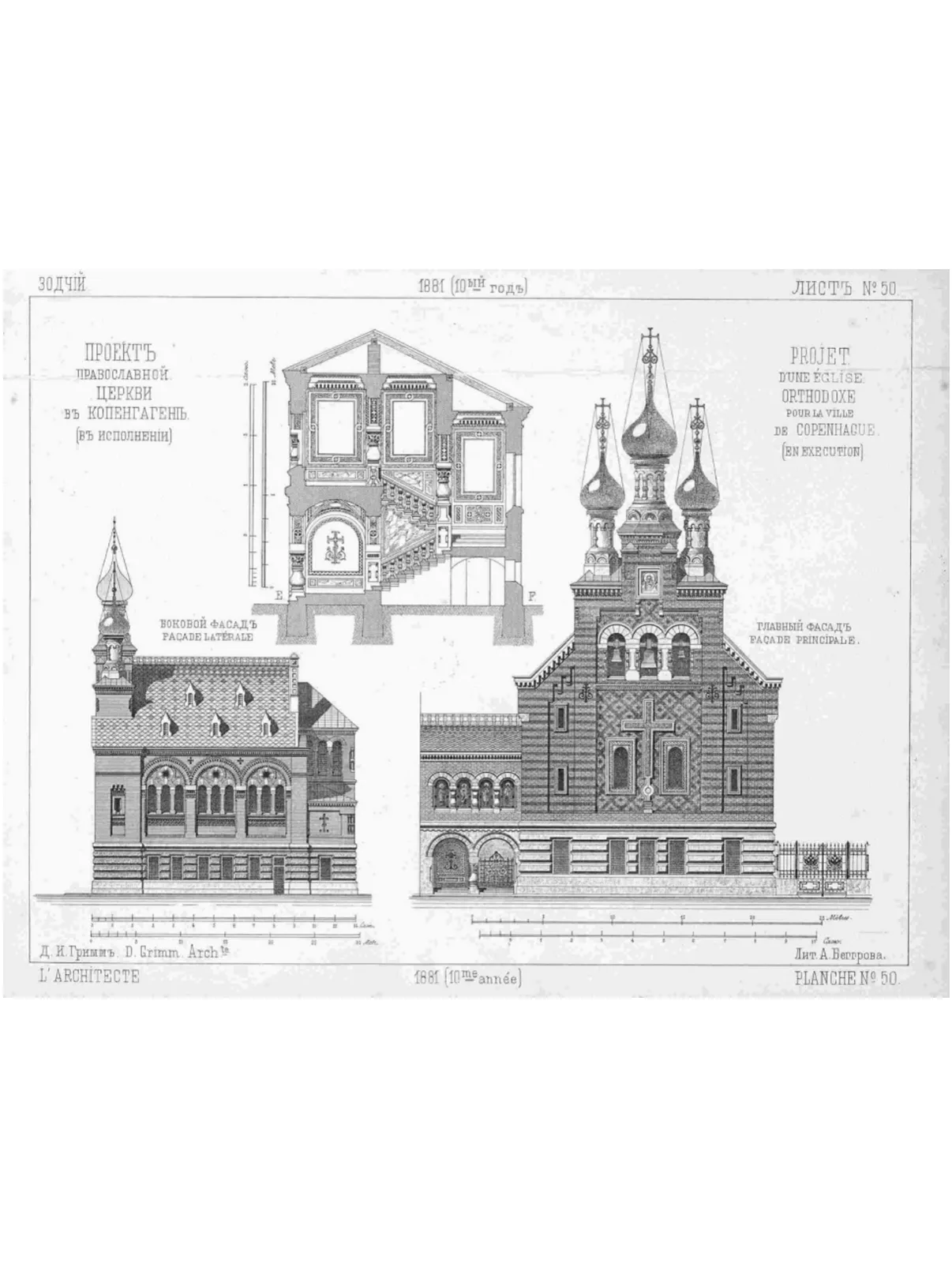
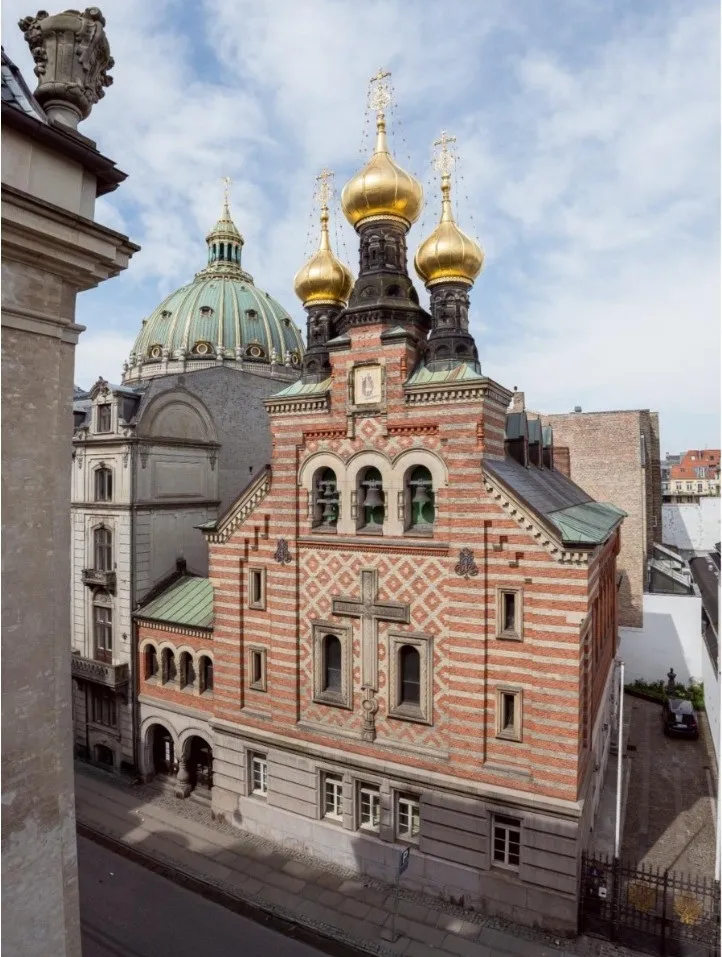
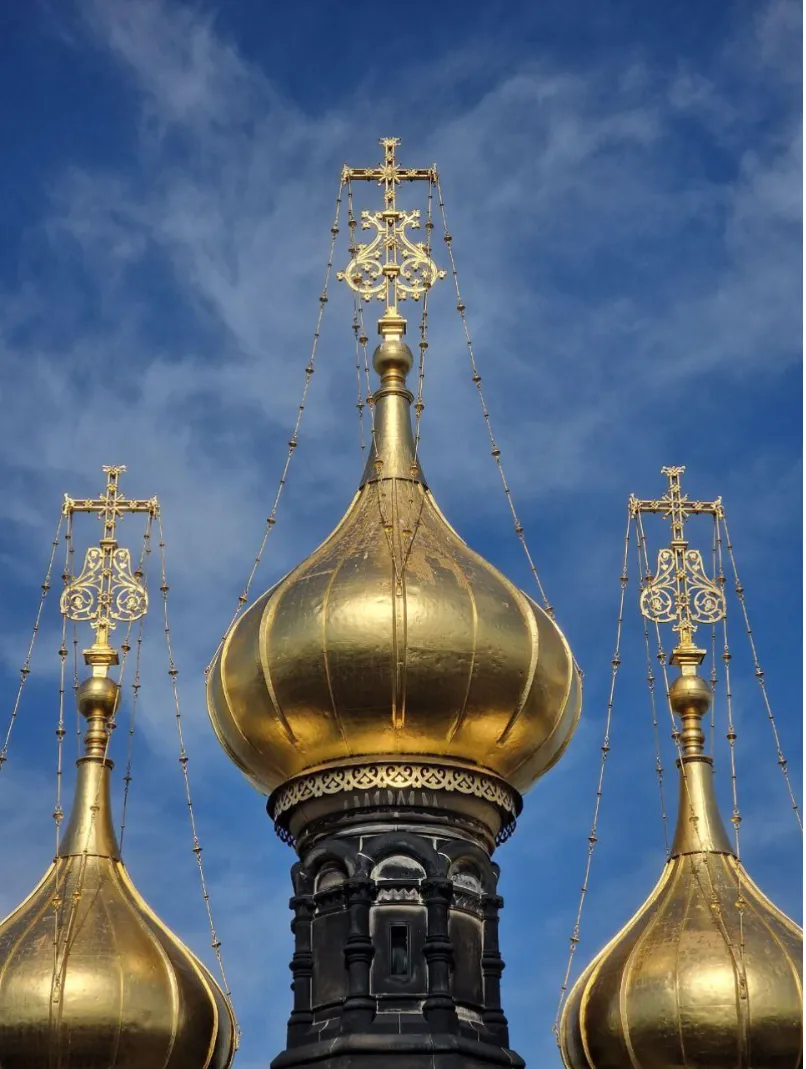
Architectural drawings of the church
The design of the church interior
High on the facade, beneath the domes, there is a niche with an icon of St. Alexander Nevsky. The icon is executed on a slab of lava stone by Professor Teodor A. Bronnikov, who also painted the icons in the church's iconostasis.
The bell tower has six bells whose sound can be heard from afar. As one ascends the richly ornamented marble staircase to the left of the church, with verses from the Book of Psalms on the walls along the way, one reaches the nave itself.
The space is lit by candlelight as well as by the large bronze church chandelier that was presented to the congregation by Emperor Alexander and Empress Dagmar. The floor is paved with black and white mosaics. The walls and ceiling are richly ornamented with gilded decoration on a dark background. At the centre stands the iconostasis with its skilfully executed woodcarvings in walnut.
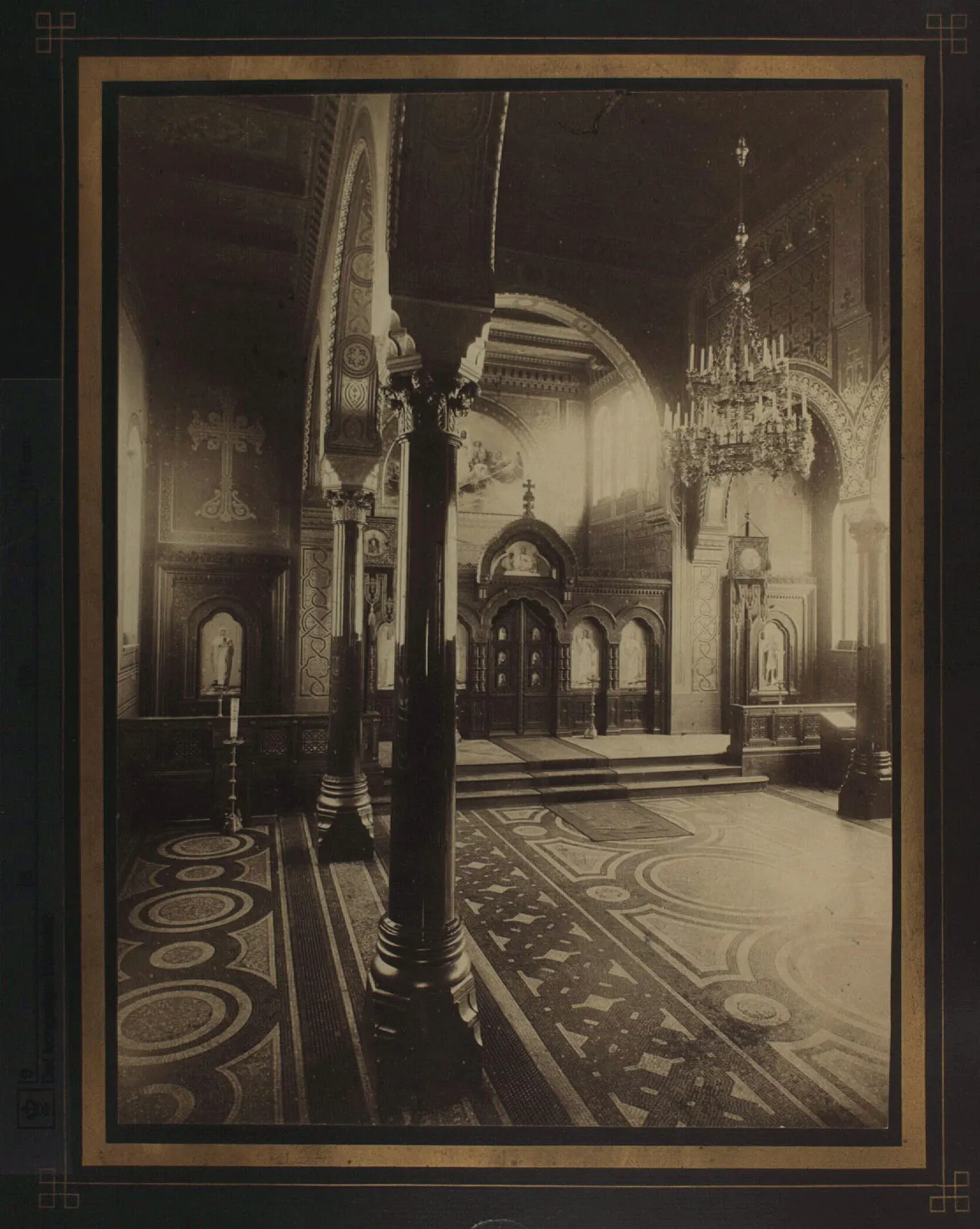
Church interior in 1883
Paintings and icons
Above the altar one sees Teodor Bronnikov's painting of "Christ stilling the storm" (Matt. 8:23-27).
To the right of the entrance is a painting depicting Christ walking on the water (Matt. 14:22-36), by the renowned marine painter, Professor Aleksej P. Bogoljubov.
On either side of the sanctuary are two paintings by the celebrated Russian artist Ivan N. Kramskoj. The two paintings depict episodes from the life of St. Alexander Nevsky.
The first painting shows the young prince at prayer with his retinue in Novgorod's Cathedral of Holy Wisdom, before the Battle of the Neva. The second shows the last moments of the saint's earthly life and his monastic tonsure to the great schema at the Feodorovsky Monastery in the town of Gorodets.
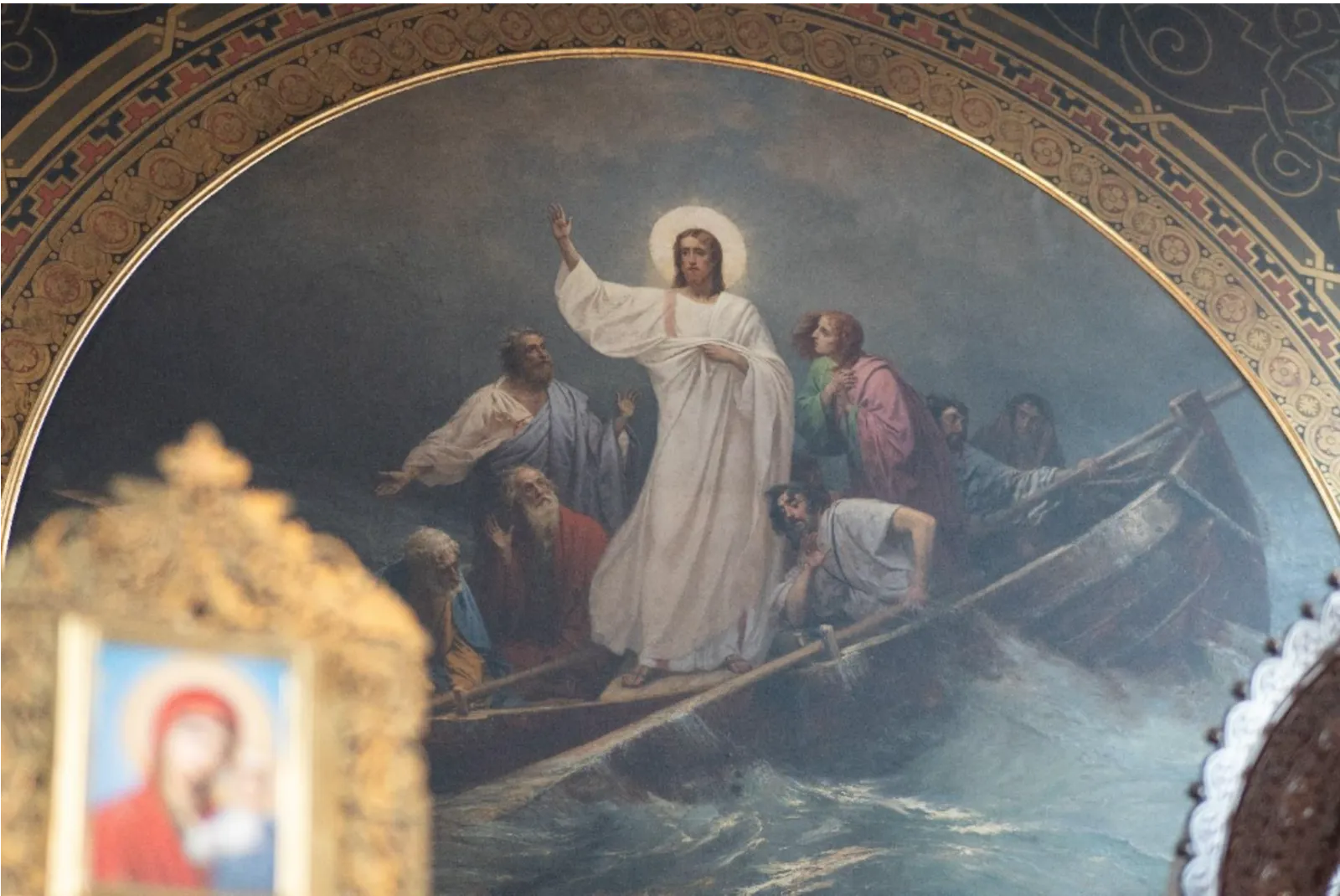
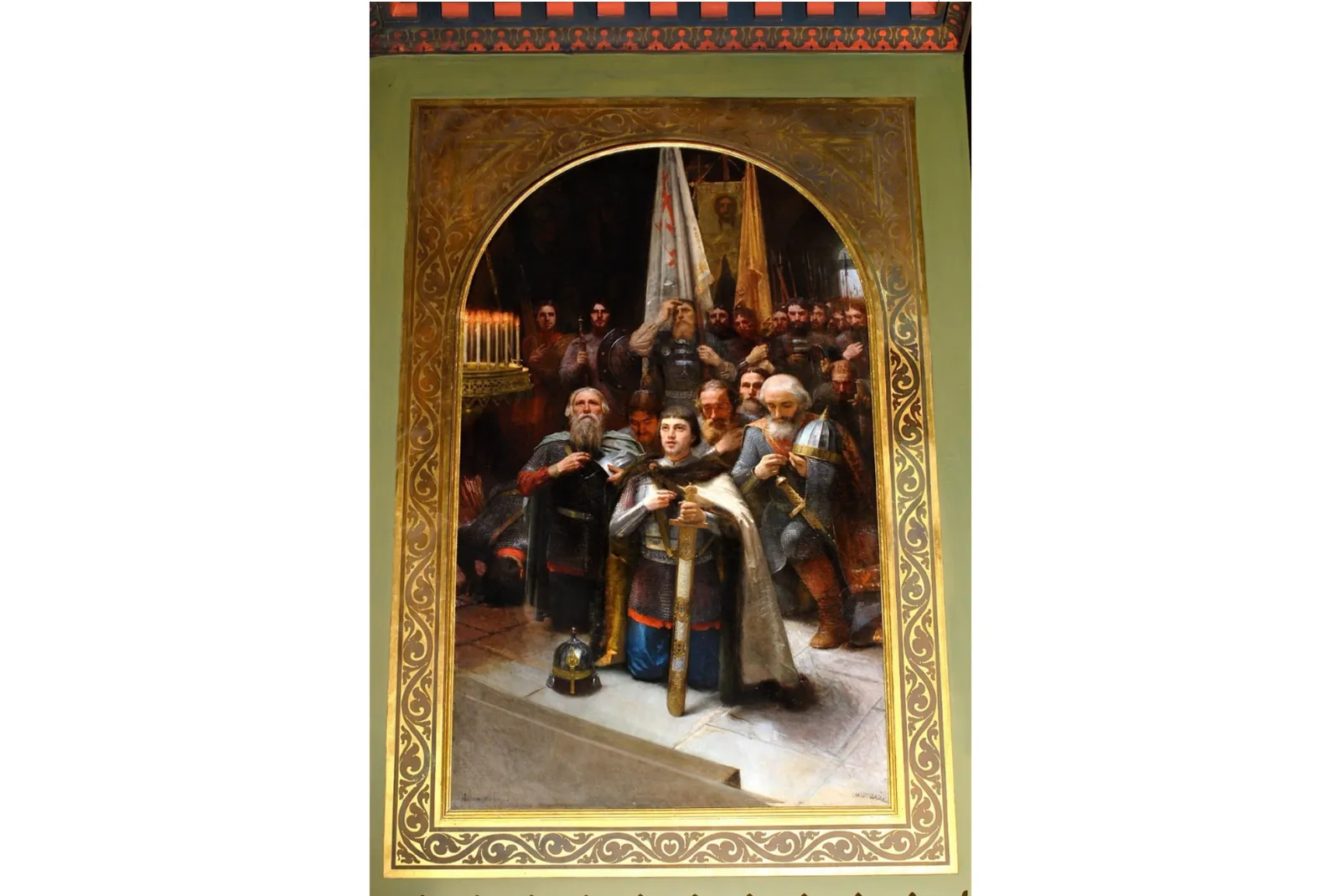
Christ stilling the storm (Matt. 8:23-27), by the renowned marine painter, Professor Aleksej P. Bogoljubov
The consecration
The construction took a little over two years and the church was completed in August 1883. Most of the external building materials come from Denmark – the ground floor is executed in Bornholm granite and the rest in traditional red brick. The lighter elements and the towers that bear the golden domes are executed in sandstone from Bremen.
The golden domes, the majestic crosses, the carved iconostasis and other wooden elements in the church interior come from Russia.
On Sunday, 9 September 1883, the church was solemnly consecrated by Archpriest Johannes Janyshev – rector of the theological academy in St. Petersburg and spiritual father of the imperial family – Archpriest Nikolaj Volobujev – rector of the congregation – and Hieromonk Mitrofan from the Alexander Nevsky Lavra monastery in St. Petersburg.
The Russian imperial family, the Danish royal family, the Greek royal family, representatives of the British royal house and many other prominent figures took part in the consecration.
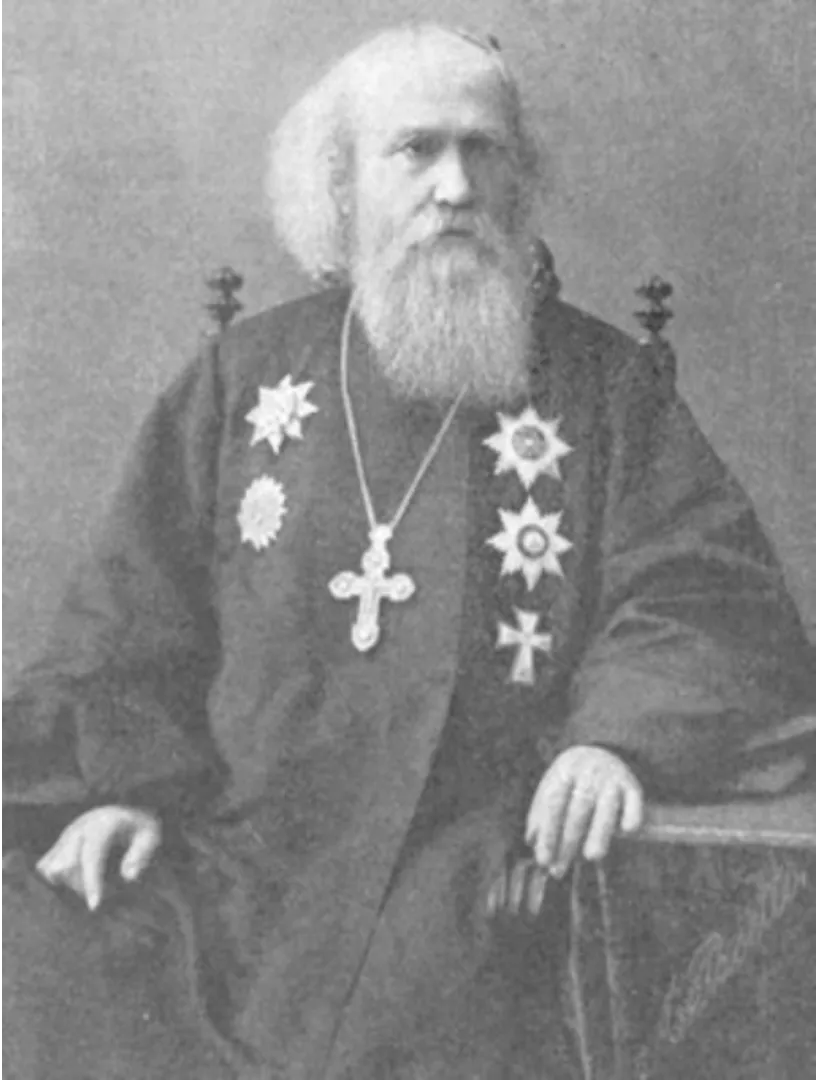
Archpriest Johannes Janyshev, spiritual father of the imperial family.